LabRacquetPilot Lab
For people who want
a closer look at strings
Cross-sections under the microscope, how unusual profiles wear over time, what a new string would look like on your racquet, and the experiments everyone wondered about. Strings first, then racquets and accessories.
ToolsTools
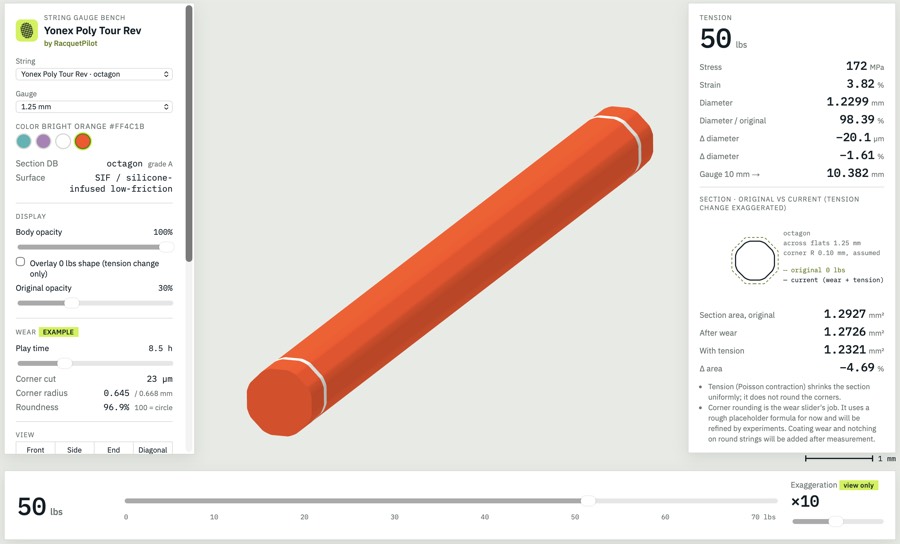
String Gauge BenchCross-section, gauge and wear in 3D, including how the profile changes with tension.
Access code required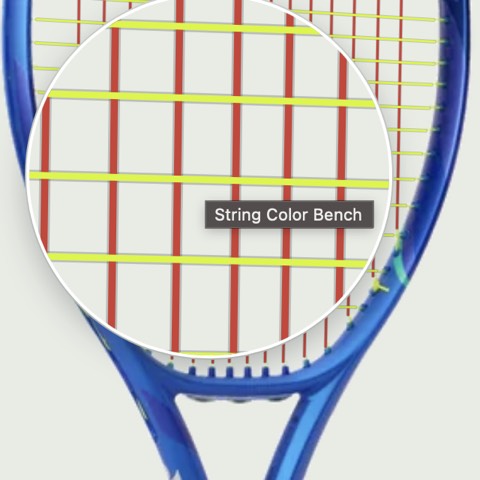 String Color Bench
How main and cross combinations look on the racquet.
Access code required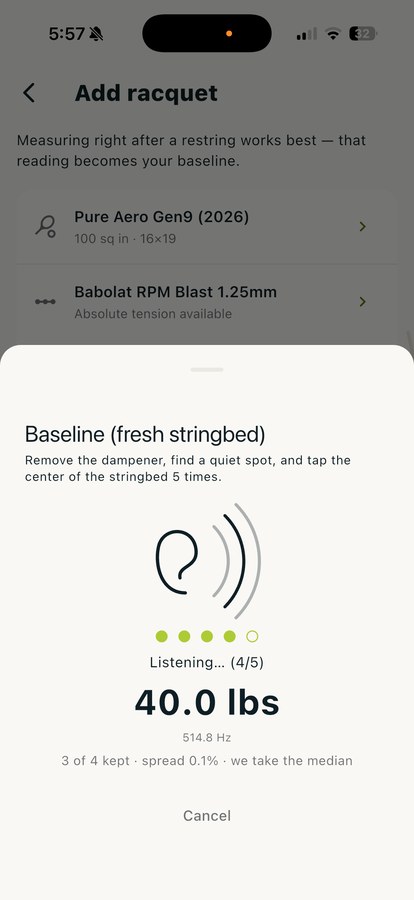 String list
15 brands. Construction and gauge from manufacturer specs, kept with source and date.
PublicExperiment 01We measure racquet face area ourselves
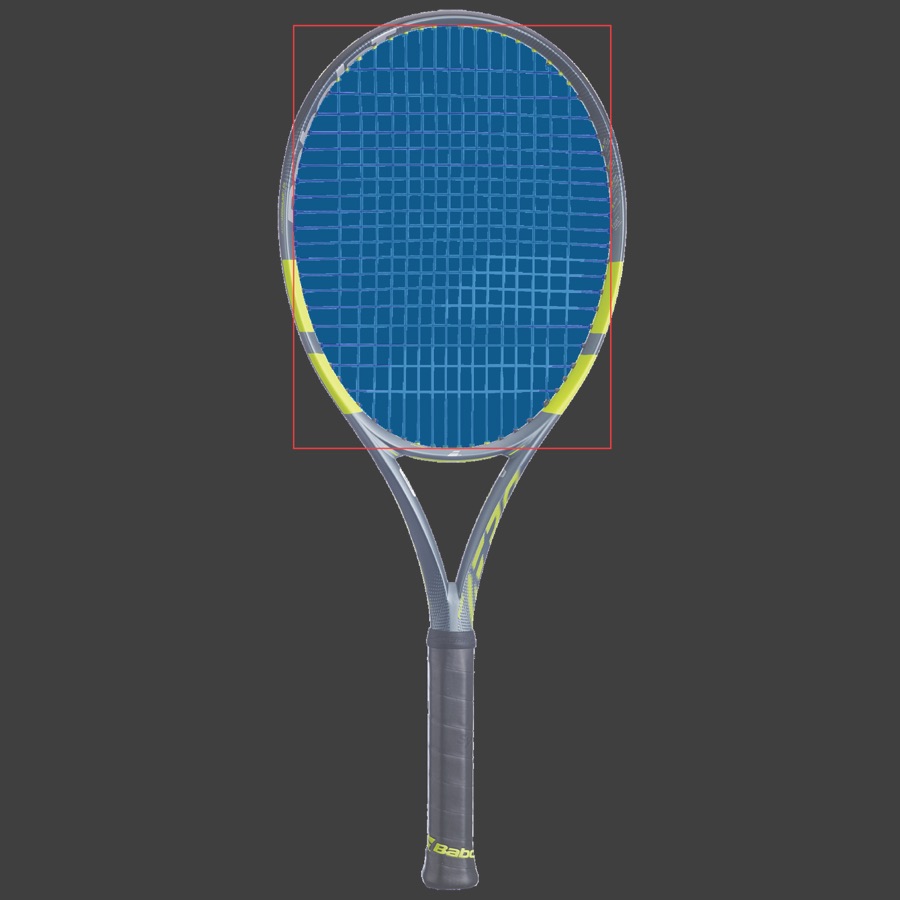
Left: the racquet. Right: the measured stringbed area. The app uses this instead of the nominal head size.
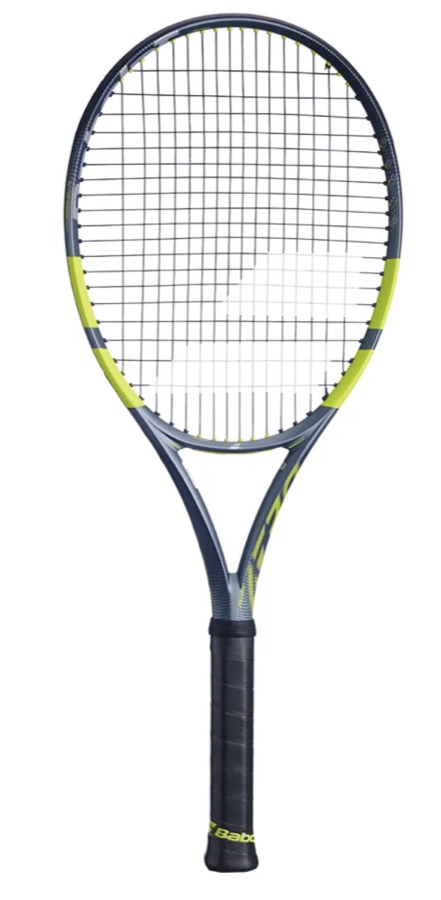
- Nominal
- 100 in²
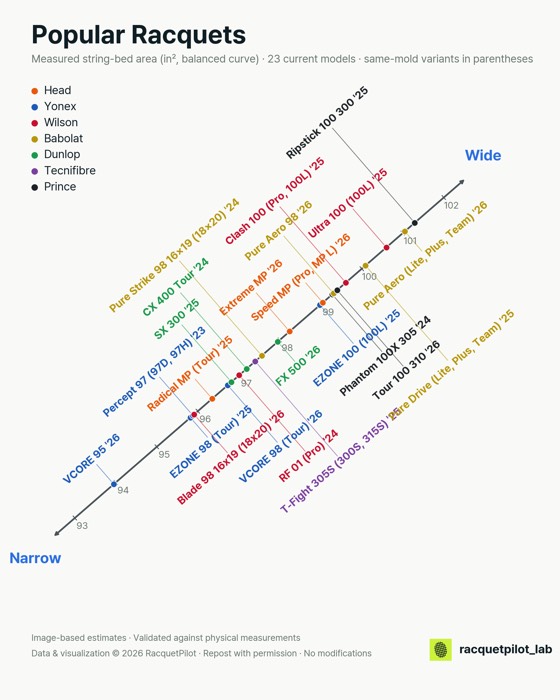
We measured 30 this way. The same "98" runs from 94 to 99.
See the spectrum →ExperimentsExperiment series
MicroscopeStrings under the microscope
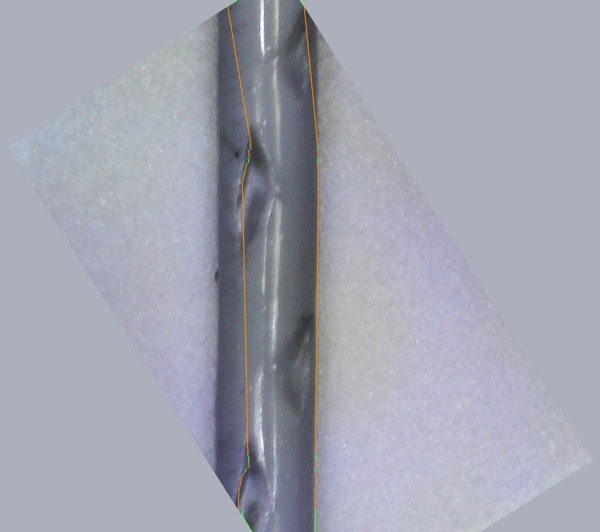
Cross-sections and surfaces. How an octagonal or hexagonal profile rounds off after a few hours of play, where the coating wears first — the same string, photographed again and again.
See it in 3D in Gauge Bench →DataHow we handle data
What appears here is manufacturer-published spec and the part of our own results we can publish. The string constants used in the tension math are measured on retail samples — one jig, one method — and stay inside the app.
- 129strings · 15 brands
- 30racquet faces measured
- n,nnnstring samples measured (tbd)
This is not a certified gauge. Absolute tension is an estimate built on our measurements, and it keeps getting tighter. Percent of day one is a ratio — that part isn't up for debate.
Access codes go to the people working with us now, and later to collaborators and paid members. Ask on the support page.
Ask for a code