All guides · Guides
Tennis String Tension Guide: What Tension Should You Use?
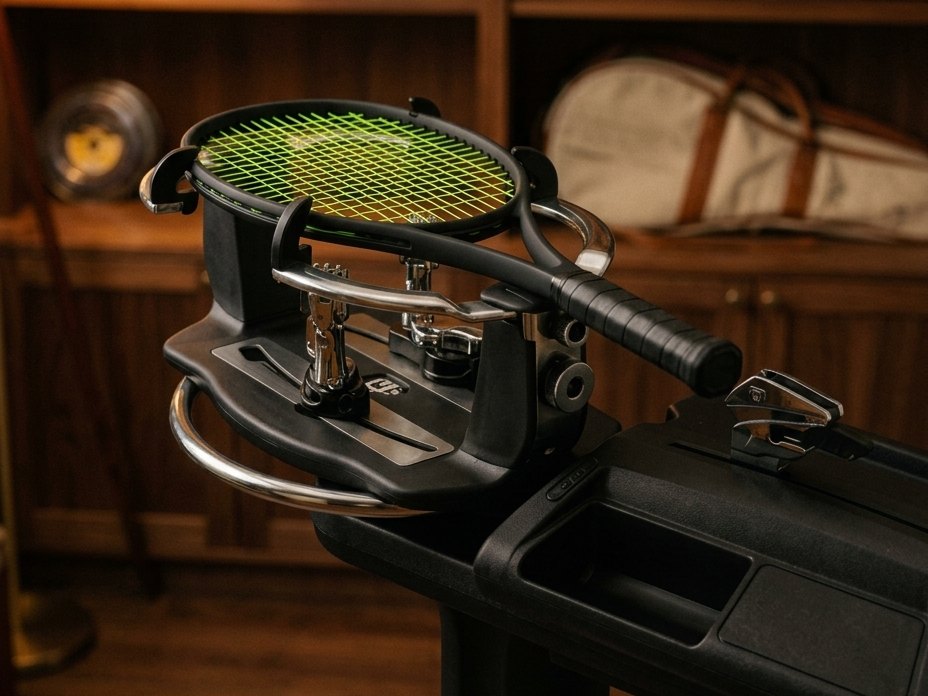
There is no single right tension. There is a sensible place to start: the middle of the recommended range printed inside your racquet's throat, a few pounds under that if you're using polyester. From there you move in 2 lb steps and let your arm decide. The number you tell the stringer is a reference point; what the strings do in the weeks after is the part that actually matters.
Key takeaway Tension isn't something you get right once. Start inside the sticker range, go a little lower for poly, and adjust 2 lb at a time. The machine number is where the story begins; how much of day-one tension is left is where it goes.
What string tension actually does
Tension is how hard the strings were pulled when your racquet was strung. It sets how stiff the stringbed is, which sets how deep the ball sinks into the strings and at what angle it leaves.
String tighter and the bed gets firmer. The ball sinks less, stays on the strings for a shorter time, and launches at a lower angle. It flies a little less, which is where "more control" comes from. String looser and you get the opposite. The strings stretch further, cradle the ball, and throw it back, trampoline-style: more pace, a slightly higher launch, and an impact that usually feels softer on the arm.
So tension is one dial that turns power, control and comfort at the same time. Gain on one side, give something up on the other. Nobody has found the free lunch yet.
Lower vs higher tension: what changes
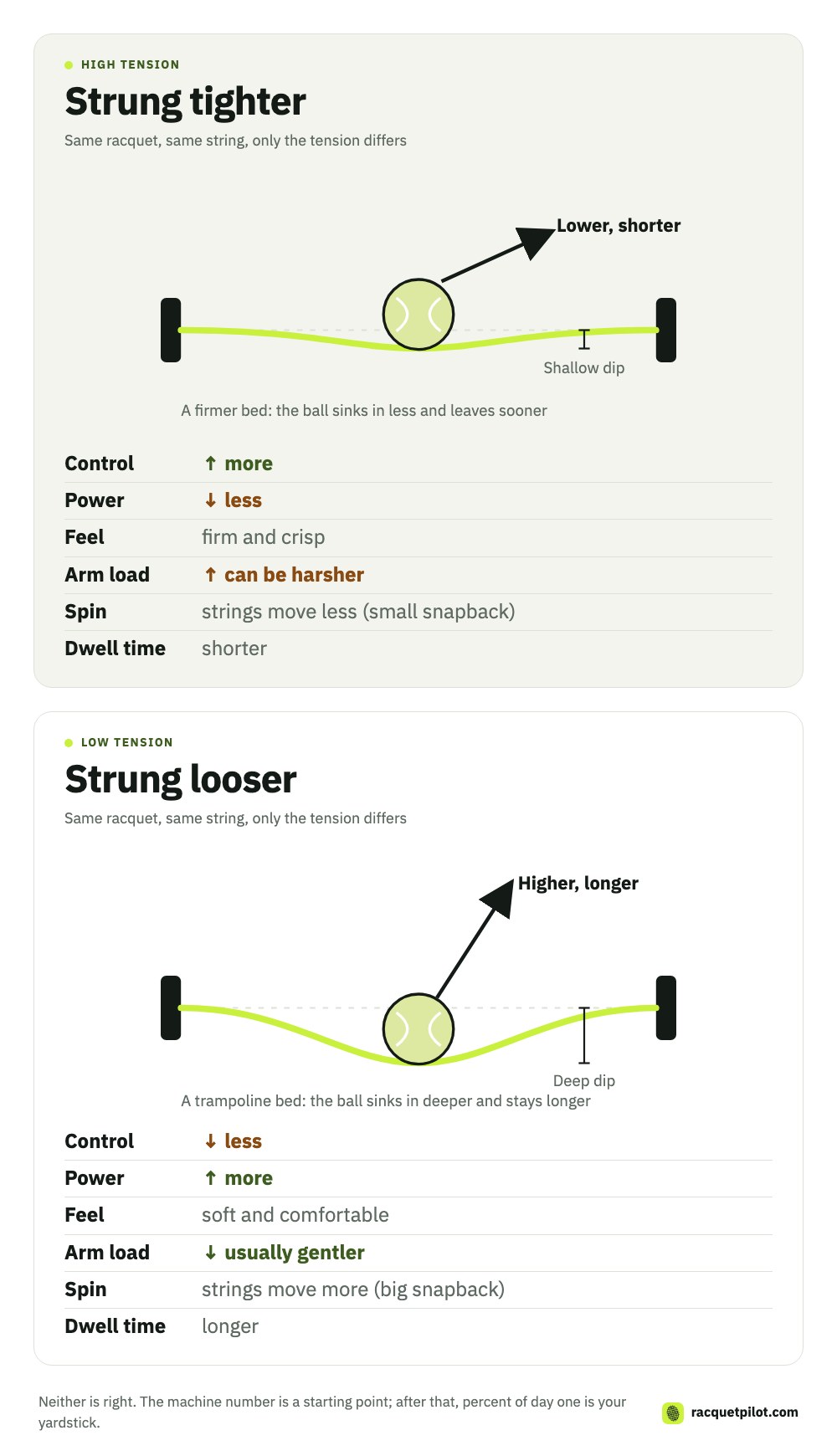
| Strung looser | Strung tighter | |
|---|---|---|
| Power | Tends to give more | Tends to give less |
| Control | Ball flies a bit higher and longer | Lower launch, ball stays down |
| Arm comfort | Usually feels softer | Usually feels firmer |
| String life | Strings move more, so notching can come sooner | Drop from the starting tension tends to feel bigger |
Read the direction of the arrows, not their length. How much each of these changes depends on the string, the racquet and the person swinging, so it can't be pinned to a number. Two traps: going up for control costs power, and some players compensate by swinging harder, which the arm may not thank them for. Going down feels comfortable, but if the ball keeps sailing, that could be the tension or the swing.
Starting points by situation
What follows are common starting points among club players and stringers, not prescriptions. First, look inside the throat of your racquet. The manufacturer prints a recommended range there: the range the frame was designed and tested for, and the most trustworthy anchor you have.
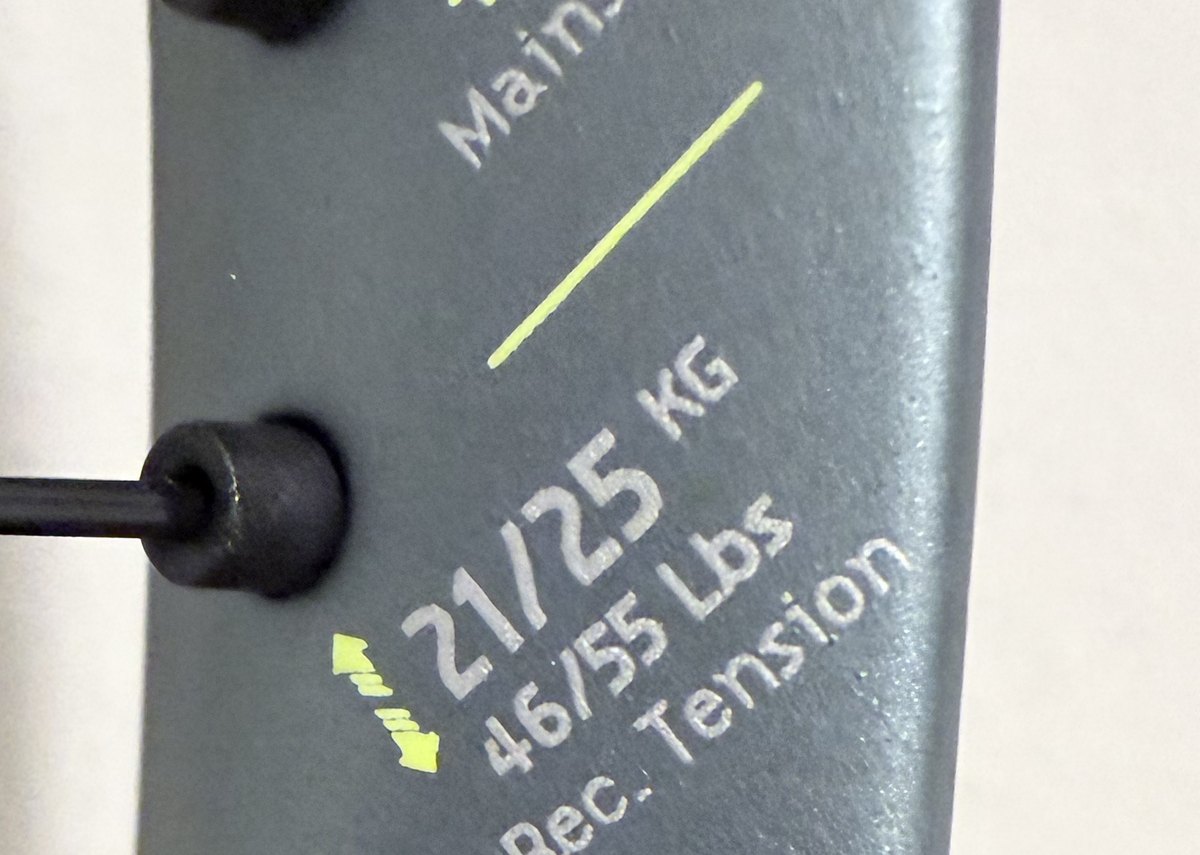
- Beginner, or you just want easy depth — 48–52 lb with a multifilament or synthetic gut. Middle of the sticker range or slightly below. Easy depth is what keeps the sport fun.
- Intermediate, balancing spin and control — 50–55 lb. Middle of the range. This is where most players settle, then explore 2 lb up and down until something clicks.
- Heavy topspin, ball keeps going long — 46–50 lb with polyester. Poly is stiff on its own, so it keeps its control even strung low. "Tighter is better" for poly is advice from another era.
- First time with poly — a common approach is to drop 3–5 lb from the tension you used with your multi. Strung at the same number, poly feels a good deal firmer.
- Arm-sensitive — 44–48 lb, and consider a multi or natural gut at the same time. Arm discomfort has many contributing factors, including string, racquet and technique, so tension alone won't settle it. It is, however, the cheapest one to change.
When you talk to the stringer, "50, please" is enough. Add one line about how the last tension felt and you'll usually get a better suggestion back.
48, 50 or 52 lb: how different are they really?
On the day of stringing, 2 lb is a small step: one click on the machine dial. Some players can pick it out blind; more can't. So move 2 lb at a time and repeat the same setup once or twice before judging. Widen the step to 4 lb and the difference becomes much easier to feel.
Here's the part that gets missed. Strings start settling the moment the racquet leaves the machine, and how fast depends on string type, gauge, how much you play and the temperature. So there's no guarantee that a racquet strung at 48 and one strung at 52 are still 4 lb apart a month later. Both are losing tension, and not at the same rate.
In other words, "48 or 52" is a day-one question. A few weeks in, "what percent of day one is left" often becomes the bigger variable. That story is in the tension loss article below.
Why the same tension feels different on another string
Even at an identical 50 lb, how firm the bed feels isn't decided by tension alone.
- String type — Polyester is stiff, multifilament is softer, natural gut is the softest and holds tension the longest. At the same 50, poly plays the firmest and gut the softest. That's the whole reason for stringing poly lower than a multi.
- Gauge — A thinner string (around 1.20 mm) stretches more, so it feels softer and grips the ball for spin, at the cost of breaking sooner. A thicker one (around 1.30 mm) does the reverse.
- String pattern — An open 16x19 lets the ball sink deeper, so it feels softer and spins more at the same tension. A dense 18x20 feels firmer with a lower launch. If you moved to an 18x20 and the ball stopped going anywhere, dropping the tension a little is the usual fix.
- Head size — A larger face means each string is longer, so the bed is softer at the same tension. The catch is that "face area" is less reliable than it looks. We measure racquet faces ourselves, and racquets all sold as "98" came out between 94 and 99 in². That's why our calculations use the measured area rather than the printed one. If a racquet swap made your usual tension feel wrong, this is one possible reason.
Stack those four together and "my friend strings at 52" is background information: their string, their racquet, their arm.
The machine number and the stringbed are two different things
When you ask for 52, that's the reference the machine pulls each string to. But between the pull, the clamp, the next string and the knots, strings settle a little through friction and relaxation. Measure the stringbed right after it comes off the machine and it reads lower than the machine number. That's normal. It isn't the stringer's mistake or the measuring tool's. The machine number is the target for the pull; the bed tension is the outcome. They were never the same quantity.
So walking back into the shop with "it doesn't read 52" puts the stringer in an awkward spot for no reason. The comparison that matters is against your own day one, not the machine number. That's what the RacquetPilot app is built around: tap the strings, the microphone picks up the vibration, and you get a tension estimate plus what percent of day one is left. Treat the absolute tension as an estimate grounded in our own measurements; the number we put front and centre is the percentage. Measure once on day one and every later reading answers "how much is left" without argument.
Limits
The pound ranges above are not our measurement results. They're starting points in common use among club players and stringers. Swings differ, string-and-racquet combinations differ, and the same string feels different from one season to the next. Use these numbers to open a conversation with your stringer, then make the final call after two or three string jobs.
Our absolute tension estimates are still being tightened against physical measurements, so read them as a reference. What we stand behind is the change between two readings of the same racquet. How much tension drops, and how fast, is the next article.
How much of day one is left in your strings?
Join the beta