All guides · Guides
When Should You Restring a Tennis Racquet? How to Know Before It Breaks
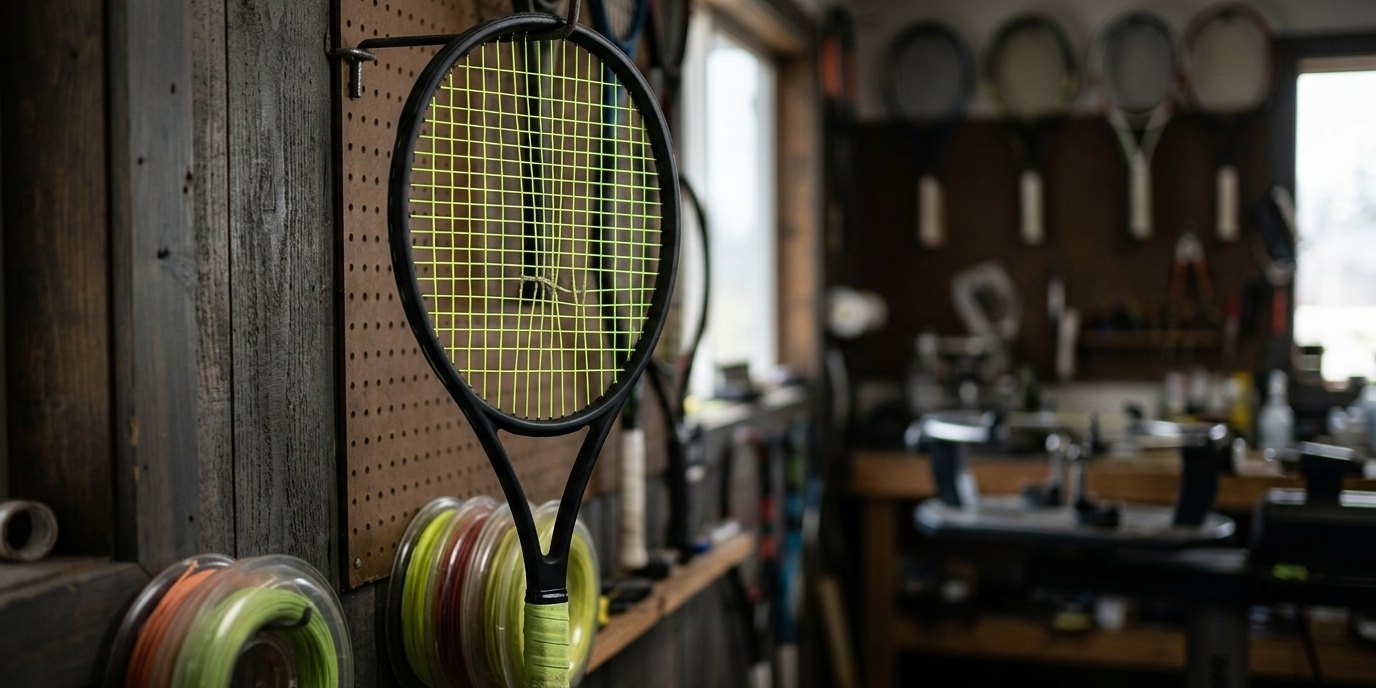
You don't wait for a string to break. Long before that, it loses tension, gets pushed sideways and stops coming back. So "when should I restring my tennis racket" is really a different question: how much of day-one tension is left? Pair that number with what your arm tells you, and you can decide on your own racquet's terms, not someone else's schedule.
Key takeaway The restring interval isn't a calendar. Keep one record from the day your strings went in, then watch two things: how far tension has dropped from that day (as a percentage) and whether the mains still snap back. If either has gone, it's time — broken or not.
Breaking isn't the only reason to restring
Breaking is about durability. Going dead is about performance. They run on different clocks. A multifilament or synthetic gut tends to fray and then snap. A polyester tends to die well before it snaps, which is why poly players ask "it hasn't broken, should I restring?" more than anyone.
Breakage is the last threshold, not the first. Play to the break and you're testing your patience, not your strings.
Five signs your strings are dead
Feel. People describe dead strings two ways: boardy, or trampoline-y. Both are right. Lost tension makes the bed springy; rising friction between strings makes it stiff. The catch is that feel is tangled up with how you slept. Some days it's you that's dead.
Balls sailing long. With less tension the bed deflects deeper and the ball stays on it longer. Same swing, more baseline errors? Suspect the strings first.
Snapback. Push a main string sideways with your finger. A live string springs back. A dead one stays where you left it. That's your spin engine switched off.
Notching. Where the mains cross the crosses, grooves form. Once the crosses sit in those grooves, snapback is blocked. You can see this one, which makes it the least arguable sign.
Sound. The day-one "ping" gets duller with time. Tighter string, higher pitch, same physics as a guitar. As tension leaves, the note drops, and that drop is what we measure.
| Sign | What it's actually measuring |
|---|---|
| Feel | Tension + friction + how you feel today (can't be separated) |
| Balls going long | Tension (how deep the bed deflects) |
| Snapback | Friction between strings |
| Notching | Wear |
| Sound | Tension (frequency) |
The five signs don't measure the same thing. Tension can be down while snapback is fine, and the reverse happens.
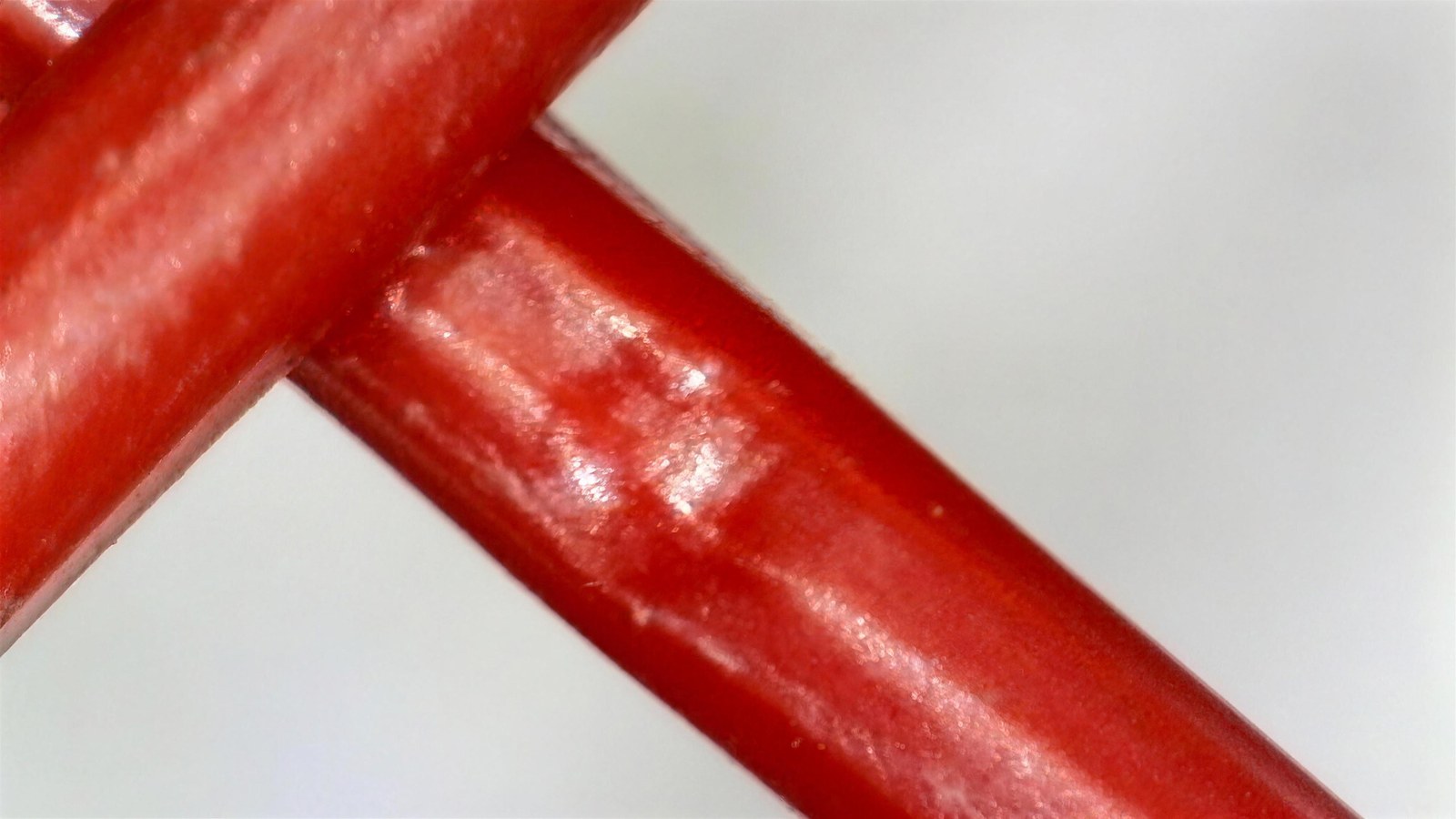
Shaped polys give you one more sign. Under the microscope a new square or hexagonal string has edges like a blade. After some hours of hitting, those edges round off. The angle that gripped the ball is gone: the string is intact, but it isn't the string you bought. In the photo above, look beside the groove to see how much the edge has softened.
Why the calendar gets it wrong
Answering "how often should I restring" with a number of weeks fails because strings wear two watches at once.
Play hours vs elapsed time. Strings lose tension from the moment they're strung, whether you hit or not. Material held under load slowly stretches; lab literature puts a large share of that loss inside the first day, with a gentler slope after. So "how long since stringing" matters more to tension than "how many hours played." Notching and friction are the opposite: they accumulate with ball strikes, and a five-times-a-week player racks up five times as many in a month as a once-a-week player.
Poly vs multi. Poly tends to shed tension faster and die as friction climbs. Multi tends to hold tension longer but frays and breaks. The same month means different things to each.
Tension. The same percentage lost feels different in pounds when the starting point is 55 versus 48. That's why percentages compare between people better than pounds.
Gauge. Thinner strings give more feel and spin, and notch and break sooner. Thicker strings trade the other way. Same product, different gauge: a different string.
Storage and heat. Poly is sensitive to temperature. A racquet baked in a car trunk for a summer afternoon loses tension without seeing a court. That's not noise; the string actually changed.
Why everyone's answer is different
Ask a forum "how many hours for poly?" and the answers run from six to eight hours to six months, each from someone honestly describing their own experience. The reason is that "dead" has no shared definition. One person watches the calendar, another goes by feel, another by notching, and another plays until it breaks.
Multiply that by how often you play, how much spin you hit with, and how sensitive your hands are. A heavy topspin player notices the moment snapback goes; a flat hitter may play the same strings for weeks longer and never mind. Other people's answers describe other people's racquets. Take them as reference, then set your own line.
How we measure it
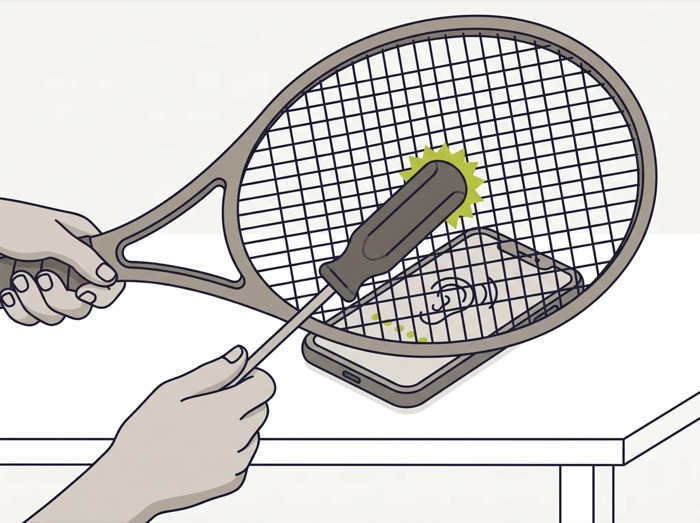
The principle is sound. Dampener off, tap the middle of the stringbed, and the phone's microphone reads the frequency. Tighter is higher, looser is lower. From that frequency the app gives today's tension (an estimate) and the percent of day one. No equipment, no recording, no account. Private beta on iPhone and Android.
The headline number is the percentage, not the pounds. Absolute tension is a measurement-based estimate, built on string constants we measured ourselves on a jig and head sizes we measured rather than took from the spec sheet, and we're still tightening it. The percent of day one is a ratio of two readings of the same racquet, and there's nothing to argue about in a ratio.
Know this before your first reading: a freshly strung bed reads lower than the number on the machine. That's normal. What the machine pulls and what stays in the bed were never the same thing; friction and relaxation get in the way during stringing. So we don't ask "the machine said 55, what is it now?" We ask "what percent of stringing day is left?"
An example. You take a reading on stringing day, then again three weeks later, and get 78% of day one. That's not a verdict. But if the last time you thought "I can't play on this" the reading was 80%, you now know to restring before you get there. The number is a memo that remembers your threshold, not a judge.
So, when do you restring?
You won't get a universal hour count here; as the sections above show, no such number can exist. What you can have is a routine built around your own racquet.
- Record day one. A percentage, a note on feel, the sound — keep at least one. After the first-day drop the change is gradual, so a baseline makes every later comparison meaningful.
- Find your line once. The first time or two you think "this is done," check the percentage and write it down. That's your number, not a stranger's.
- From then on, watch two things together. Percentage nearing your line and mains not snapping back: restring, no debate. Percentage fine but snapback gone: if you hit with spin, restring. Percentage down but snapback alive: if you like lower tension anyway, carry on a while.
- Leave margin before a match that matters. Don't ride the line. Given the first-day drop of a fresh job, two days before is more comfortable than the night before.
Limits
What we read from sound is tension. Notching and friction barely show up in the frequency, so snapback stays a finger test and notching an eye test. The app won't tell you your spin has died.
Absolute pounds are a measurement-based estimate. We don't claim they equal the machine setting, and they can't. What we're confident in is change.
We can't predict when a string will break. Breakage comes from accumulated wear and where you've been hitting, and one tap can't see that.
We don't make calls on your body either. Dead strings can be one factor among many in elbow pain, but that alone doesn't establish a cause.
Last, temperature and humidity. A hot-day reading and a cold-day reading differ, and that's the string actually changing, not error. We keep those readings with their dates, but for your baseline and comparisons, measure under similar conditions.
How much of day one is left in your strings?
Join the beta